More Good Days, Together 💚
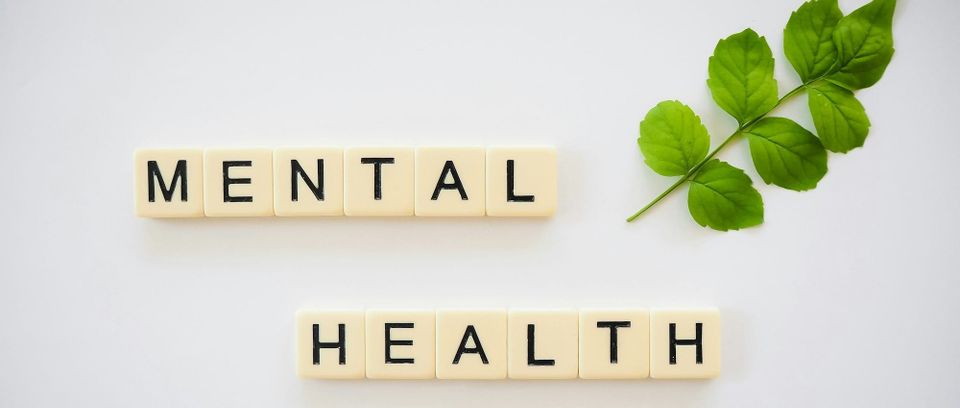
May is a time to raise awareness about mental health while also encouraging healthy habits that support our mental health throughout the year. Taking care of your mental health is important for everyone, and small daily activities can create a major positive impact.
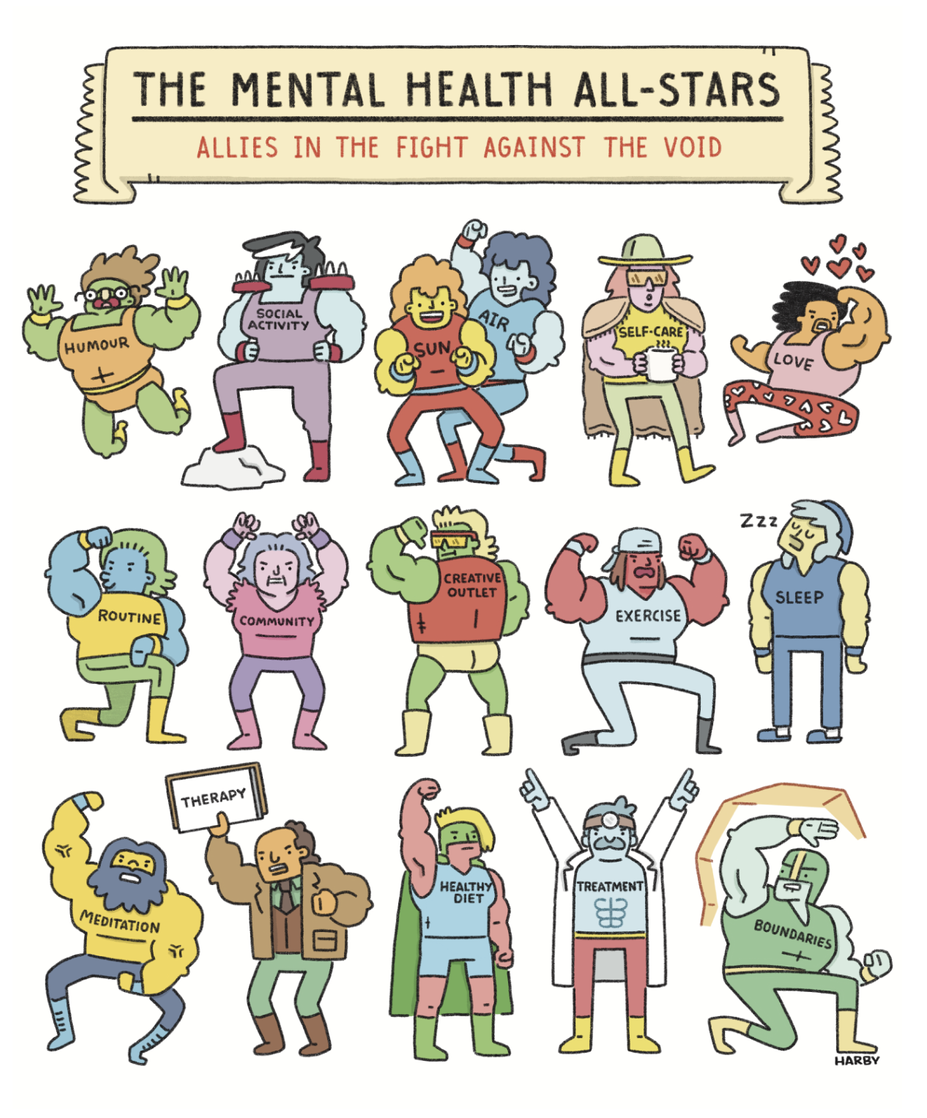
Mental Health Activities to Try This May
- Go for a walk outdoors
Fresh air and movement can help reduce stress, improve circulation, and can boost your mood. - Practice mindfulness or meditation
I like to use Youtube or an app on my phone called Insight Timer for guided meditations.
- Start a journal
Writing down thoughts and feelings is a healthy way to process emotions. - Connect with family and friends
Spending time with supportive people can boost happiness and reduce feelings of loneliness. - Take breaks from social media
Unplugging for a while can help lower stress and improve focus.- Having a hard time putting your phone down? Try switching your screen to grayscale (black and white). Bright colors dramatically affect our brain and can even encourage addictive behaviors.
- "Analyses showed that grayscale setting decreases usage time and that there is a positive correlation between PSU, smartphone usage duration, and perceived suffering. The types of use (process and habitual) influence one's perceived suffering. Thus, it shows that individuals are aware of their PSU and suffer from it. Using grayscale setting is effective in reducing smartphone use time." (Lea-Christin Wickord & Quaiser-Pohl, 2023)
- Having a hard time putting your phone down? Try switching your screen to grayscale (black and white). Bright colors dramatically affect our brain and can even encourage addictive behaviors.
- Try a new hobby
Hobbies create connection, build relationships, and encourage a sense of community. They also allow for us to express ourselves in creative ways and create new outlets. - Exercise regularly
Physical activity helps release endorphins and can improve our overall mood and energy. It can also act as a coping mechanisms, creating a distraction moment of us as we exercise. - Practice gratitude
Gratitude has major health benefits. Writing down 2 to 3 things a day that you are grateful for has benefits such as decrease in depressive symptoms, heart health benefits, and can even improve sleep!

- Get enough sleep
Good sleep is essential for both mental and physical health. Sleep regulates our moods, helps us process our memories, and allows for cleaning processes that remove toxins from the brain, protecting against cognitive decline! - Reach out for support when needed
Talking to a trusted friend, family member, or a mental health professional for support is a sign of strength.


Small steps each day can lead to healthier habits and a happier life.
References:
Lea-Christin Wickord, & Quaiser-Pohl, C. (2023). Suffering from problematic smartphone use? Why not use grayscale setting as an intervention! – An experimental study. Computers in Human Behavior Reports, 10(100294). Science Direct. https://doi.org/10.1016/j.chbr.2023.100294
Mental Health Month | Mental Health America. (2025, March 18). Mental Health America. https://mhanational.org/mental-health-month/
Tompa, R. (2025). How sleep affects mental health (and vice versa): What the science says. News Center. https://med.stanford.edu/news/insights/2025/08/sleep-mental-health-connection-what-science-says.html
UCLA Health. (2023, March 22). Health Benefits of Gratitude. Www.uclahealth.org. https://www.uclahealth.org/news/article/health-benefits-gratitude
Zhu, W., Zhang, Y., Lan, Y., & Song, X. (2025). Smartphone dependence and its influence on physical and mental health. Frontiers in psychiatry, 16, 1281841. https://doi.org/10.3389/fpsyt.2025.1281841