Self-Care During the Holidays
Why It Matters (and What Research Says)
Trigger Warning: discussion of suicide
The holiday season is often labeled as the most wonderful time of the year. But for many people, it can also one of the most stressful. Studies and surveys consistently show that the demands of holidays can strain both mental and physical health.
A national survey by the American Heart Association found that 63% of adults say the holiday season is more stressful than tax season, and 79% agree they often overlook their own health while trying to make the season special for others. Many report having trouble maintaining healthy habits such as eating well, exercising, and getting enough sleep during the holidays, and over half said it takes several weeks to feel less stressed afterward.
Why Are The Holidays Stressful?
Researchers and mental health professionals point to several key stressors common during the holidays:
- Social and family pressures: Wanting gatherings to be perfect can heighten anxiety and increase emotional distress.
- Financial burden: Planning gifts and celebrations can introduce significant financial stress for some, creating an added bonus of stress while wanting their gatherings to be perfect.
- Routine disruptions: Changes in sleep, eating, and daily schedules can unsettle well-being and make stress harder to manage.
These pressures can accumulate and interfere with a person's overall well-being, causing them to have a decrease in abilities to cope and regulate during the holidays. Along with higher levels of stress during the holidays, there is the common belief that holidays will cause an increase in suicide rates.
The Holiday Suicide... Myth?
Popular media reports that suicide rates increase during the holidays but this statement has actual been unfounded. It is believed this myth started out of good intentions; wanting to bring awareness to suicide rates and help others identify behaviors to watch out for while around loved ones.
While many people feel lonelier or more distressed during this time, research consistently shows that suicide rates continue to decrease during major holidays. Data collected from the U.S. Centers for Disease Control and Prevention have found between January 1999 and December 2017 show the months of November and December have consistently had the lowest rates of suicide. Declines are attributed to an increase in connection with family and friends, as well as a stronger sense of belonging and shared routine, creating protective factors for many. However, this does not mean the holidays are easy for everyone. Emotional distress, anxiety, and depression can still intensify, especially when expectations clash or people have limited support systems.
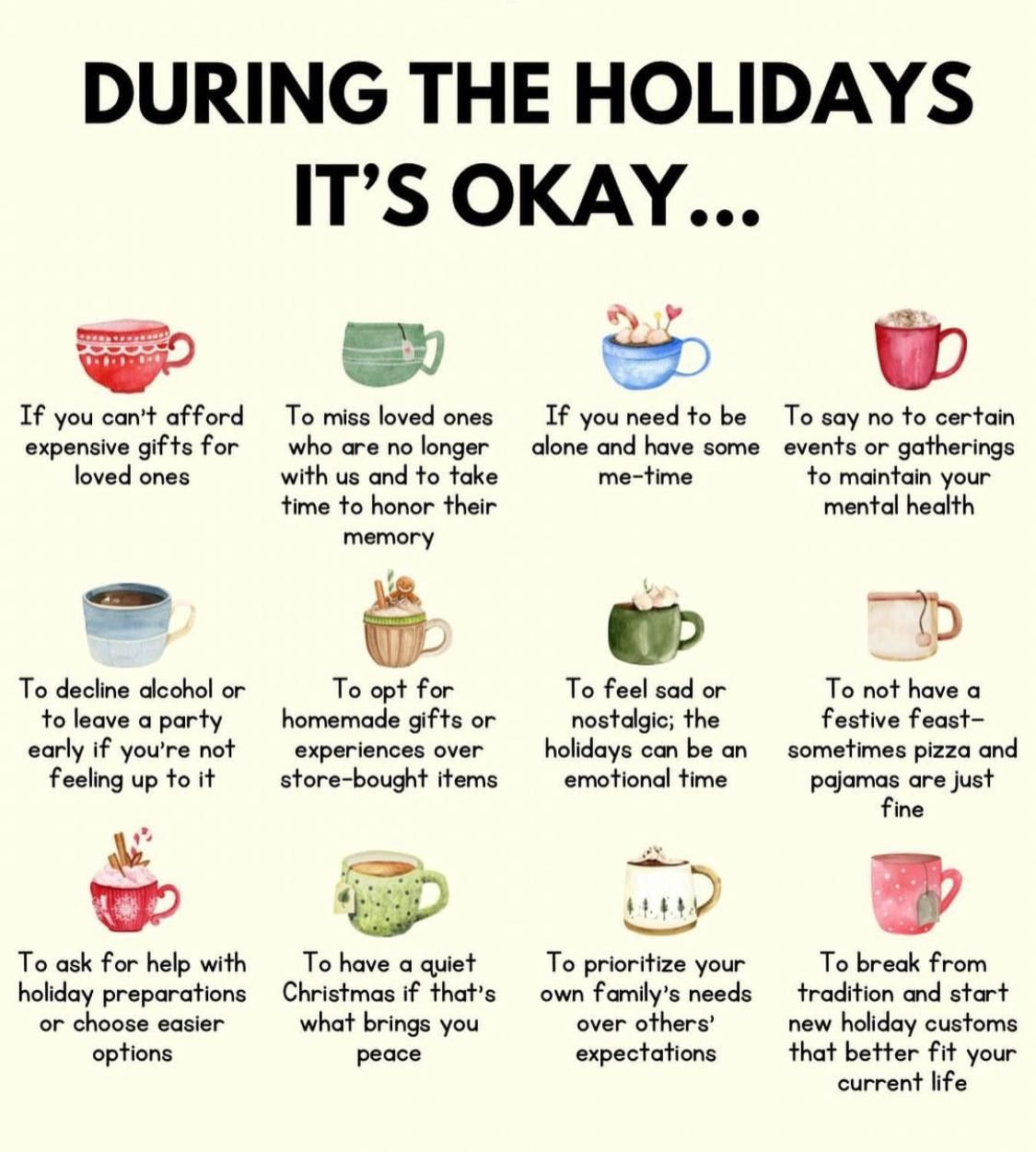
With an increase in pressure, financial concerns, disruption in routines, and concerns for other's overall mental well-being, focusing on and implementing self-care strategies can greatly help alleviate distress for many.
Self-Care Strategies That Work
Research on stress and well-being suggests that even small intentional practices can have a real impact:
✨ Prioritize Rest and Healthy Routines
Maintaining basic habits like balanced meals, regular sleep, and moderate exercise gives your body and mind a foundation of resilience. These routine activities are often the first to go when life gets busy, but they are also some of the most protective factors against stress.
🧠 Set Realistic Expectations
Perfection is not only unrealistic, it’s a major source of stress. Adjusting your goals for the season and deciding ahead of time what matters most can help you enjoy meaningful moments rather than rush through a long to-do list.
💬 Establish Boundaries
It’s okay to say no to events or obligations that drain your energy. Setting boundaries with your time, your social calendar, and even your budget isn’t selfish.
💝Practice Mindfulness and Self-Compassion
Taking even a few moments for mindful breathing, gratitude journaling, or just quiet reflection can reduce emotional tension and help you stay grounded. Focusing on what you’re grateful for rather than what’s overwhelming can shift your mindset in powerful ways.
988 Suicide & Crisis Lifeline
☎️Someone to talk to: Call or text 988 or visit 988lifeline.org.
🗣️In-person support: Mobile crisis teams are available statewide to provide immediate assistance. This can be accessed through either 988 or 911.
💕Specialty care: The CARES Crisis Response team supports individuals with developmental disabilities. This is accessed through 988.
⚕️Crisis stabilization: Crisis stabilization facilities are available across the eight regions to those in need. Additionally, Fargo, Bismarck, Minot, Williston, and Jamestown provide 24/7 short-term residential, walk-in care. Contact your regional Human Service Center behavioral health clinic for assistance.
The Takeaway
The holidays can be joyful and meaningful, but that doesn’t mean they’re stress-free. Research shows many people feel more pressure than pleasure during this time of year. Prioritizing self-care is one of the most effective ways to protect your health and actually enjoy the season you’ve been planning for. This year, give yourself the gift of rest, kindness, and intentional self-care.
References:
HHS urges suicide prevention, mental health awareness support during the holidays. (2022). Health and Human Services North Dakota. https://www.hhs.nd.gov/news/hhs-urges-suicide-prevention-mental-health-awareness-support-during-holidays
Holiday stress: 5 things to know about managing it. (2025). News Center. https://med.stanford.edu/news/insights/2025/12/stress-management-coping-skills-and-tools.html
NAMI. (2022, December 16). The “Happiest” Time of The Year: Tips for Managing Holiday Stress. National Alliance on Mental Illness (NAMI). https://www.nami.org/anxiety-disorders/the-happiest-time-of-the-year-tips-for-managing-holiday-stress/
New Survey: 79% of survey respondents overlook their health needs during the holidays; find the holidays more stressful than tax season. (2023). American Heart Association. https://newsroom.heart.org/local-news/new-survey-79-of-survey-respondents-overlook-their-health-needs-during-the-holidays-find-the-holidays-more-stressful-than-tax-season
R-IV PHTC. (2024, December 3). The Holiday Blues: A Public Health Perspective - Region IV Public Health Training Center. Region IV Public Health Training Center - the R4PHTC Helps Build and Sustain a Skilled Workforce with Free Learning Tools and Support Designed to Meet the Unique Needs of Our Region. https://r4phtc.org/the-holiday-blues-a-public-health-perspective/
Yeh, T. C., Hsu, T. W., Kao, Y. C., Thompson, T., Stubbs, B., Carvalho, A. F., Yang, F. C., Tseng, P. T., Hsu, C. W., Yu, C. L., Tu, Y. K., & Liang, C. S. (2025). Suicide risk on Christmas Eve, Christmas Day, New Year's Day, and Valentine's Day: a systematic review and meta-analysis. Frontiers in public health, 13, 1668476. https://doi.org/10.3389/fpubh.2025.1668476