How Do We Write Love on Her Arms?
September, the month of many things. The start of the school year, the kick off of football, the end of summer break. The first -ber month, signaling the upcoming fall and winter months that many love. The month of Earth, Wind & Fire's most popular and widely acclaimed best song. 🎶
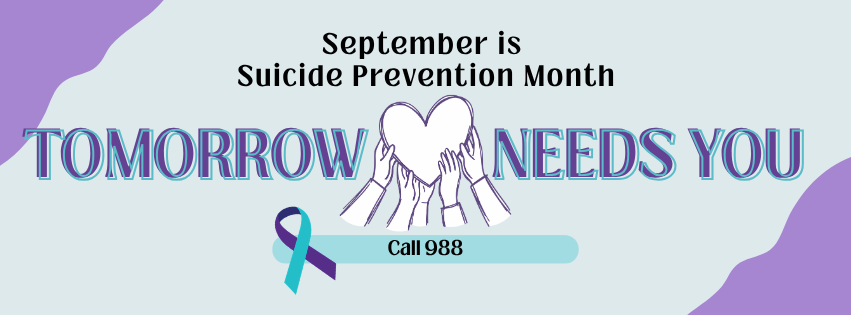
September, also the month for Suicide Prevention.
When I was a young boy 🎶
It's 2006. You're a young teenager that just got home from school. Myspace is extremely popular so you log on and look at your profile. Your friend sends you a new image of your favorite band and you see this cool shirt they are wearing. As you look into it, you see a lot of bands are wearing this shirt; it says To Write Love on Her Arms. So you decide to Ask Jeeves about it.

Jeeves tells you about the story about a group of friends wanting to support another and how To Write Love on Her Arms came to be.
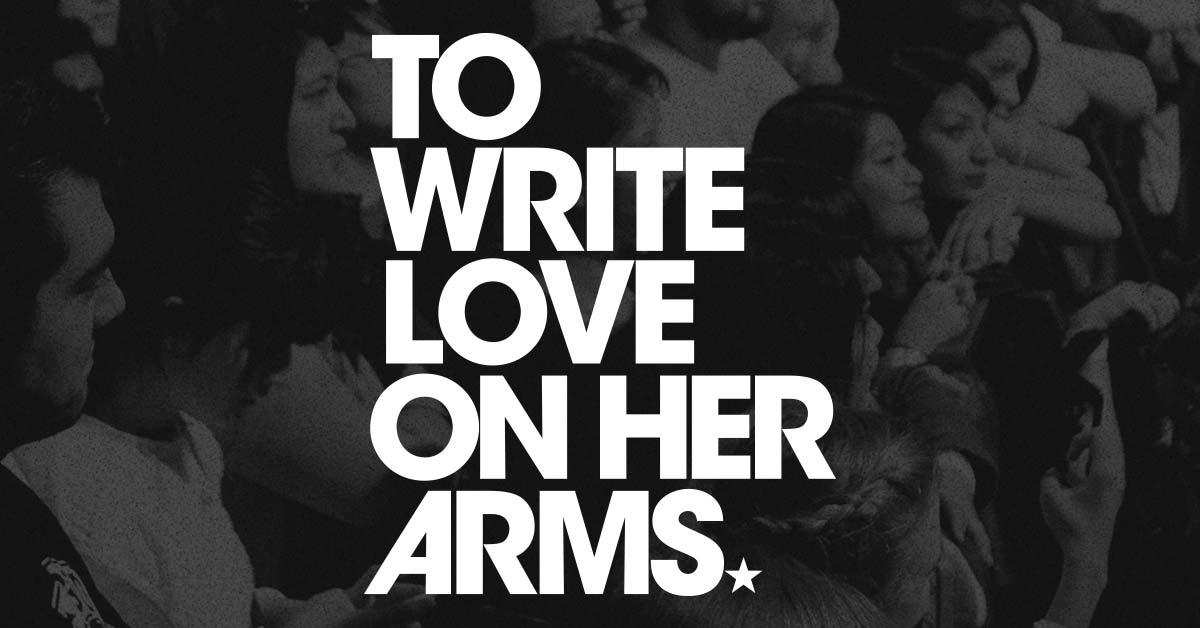
To Write Love on Her Arms (TWLOHA) is a nonprofit organization founded by Jamie Tworkowski in 2006. Tworkowski wrote about his experience with a young addict, name Renee Yohe, who self-harmed by cutting the words "FUCK UP" on her arm with a razor blade and was struggling with addiction, depression, self-injury, and suicidal ideation. Tworkowski journals Yohe's life for five days before she was able to enter treatment. Yohe had attempted to enter into a rehab facility earlier but was turned away due to being deemed too much of a safety concern. Unable to get immediately care, Tworkowski and a group of friends, stayed with Yohe and offered their support until she was able to be admitted into care.
TWLOHA focuses on mental health and suicide prevention. To this day, it continues to support people struggling with depression, addiction, self-injury, and suicidal thoughts by connecting people with mental-health resources, challenging stigma and providing hope to those whose need it, and help fund treatment and recovery services.

According to the World Health Organization (WHO), more than 720,000 people die by suicide every year. The CDC reports suicide was responsible for 48,824 deaths in the United States per year, equaling about 133 deaths by suicide each day, with it being the second leading cause of death among youth and young adults ages 15-34.
Statistics and Common Factors about Suicide
- Gender: Women are roughly 1.5 to 3 times more likely to make a suicide attempt than men, while men die by suicide roughly three to four times more often than women and account for nearly 80% of all suicide-related deaths due to lethal means (CDC, 2026).
- By Race/Ethnicity: Non-Hispanic American Indian and Alaska Native (AIAN) people have the highest rate of suicide at 22.5 per 100,000, followed by non-Hispanic White individuals at 17.2 per 100,000. Over the past 10 years, rates have only increased for people of color, particularly Black and Hispanic populations (CDC, 2026).
- Mental Health Impact: An estimated 14.3 million U.S. adults have seriously thought about suicide, 4.6 million have planned out an attempt, and 2.2 million have actively attempted suicide in 2024 (CDC, 2026).
- Mental Health Conditions: Depression, anxiety, bipolar disorder, and post-traumatic stress disorder (PTSD) are common diagnoses that accompany suicidal ideation.
- Life Stressors: Acute loss, rejection, family conflict, financial uncertainty, disasters, or social isolation create an increase of stress and can cause a person to make an impulsive decision.
- Access to Lethal Means: Having easy access to firearms or harmful substances increases the chances of a lethal outcome.
Research shows that suicide rates are often higher in rural areas due to social, cultural, and economic challenges, as well as limited access to mental health providers.
How do we help?
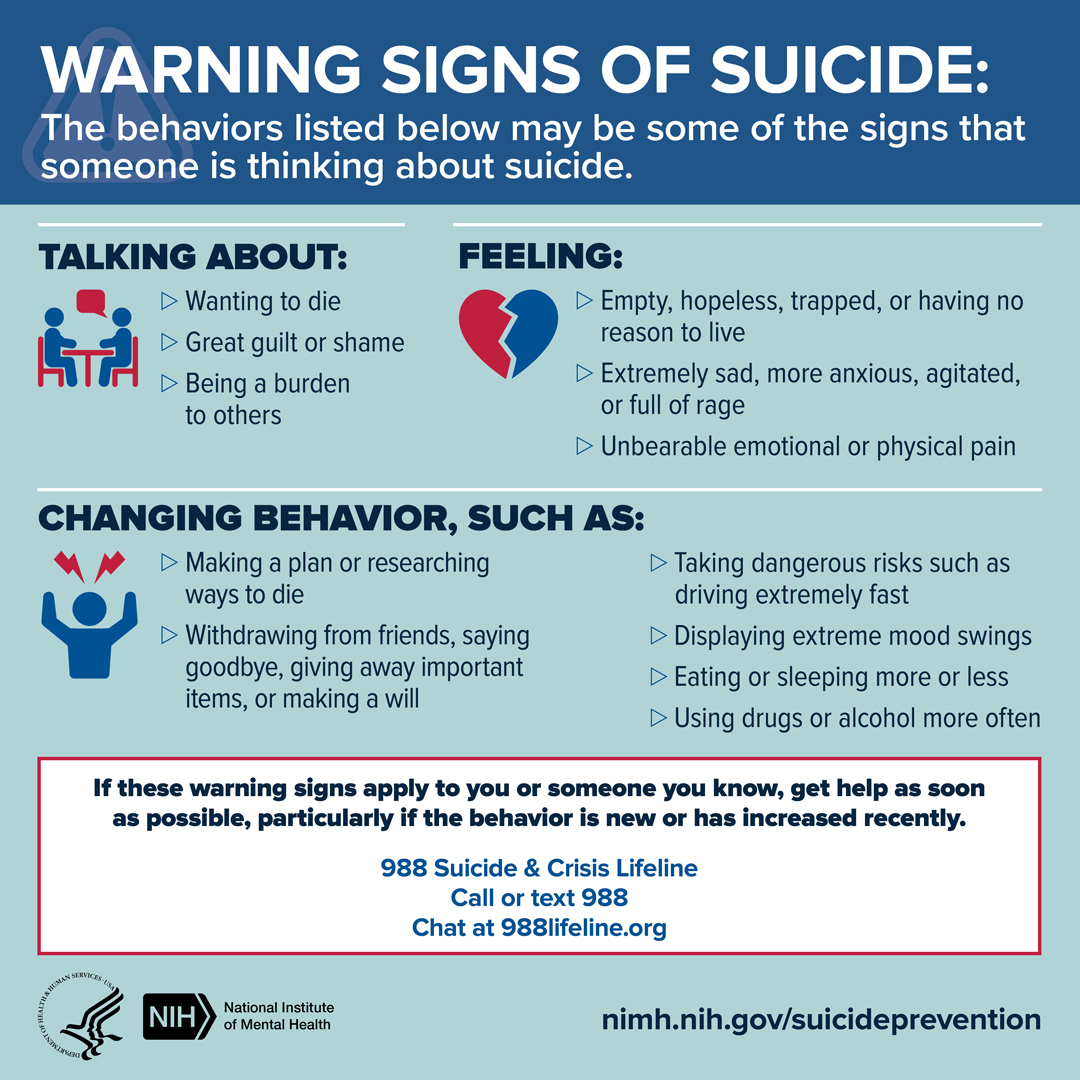
We know there is a link between suicide and mental disorders (in particular, depression and alcohol use disorders) and a previous suicide attempt. However, mental illness is not the only reason why someone may attempt or commit suicide. Many suicides happen due to impulsivity such as in moments of crisis. This could be due to the inability to deal with life stresses, such as financial problems, relationship disputes, chronic pain and illness, or even violence and disasters.
So how do we prevent suicide in our communities. One of the major changes that can impact someone's chances of dying by suicide have to do with our ability to reduce the socioeconomic deprivation. Socioeconomic deprivation is the lack of social, economic, and material resources needed to maintain a standard of living and overall well-being relative to community norms.
We reduce this by the following:
- Support food pantries with funding and give out food
- Provide a universal monthly income
- Increase housing support and housing safety nets
- Create stable financial supports for families – this could be universal income but this also means making sure life is affordable for families
- Decrease issues with access to medical care
- Reduce ease of access to firearms
- Research shows that nearly 6 out of 10 gun deaths in the US are suicides.
- Research tracked by KFF shows that states with very few gun laws have 10.8 firearm suicides per 100,000 people, while states with many gun laws have 4.9 per 100,000 (Saunders, 2022).
- Reduction in ease of access could mean a simple 24 hour waiting period that would decrease suicides. Most people may act during a brief crisis moment. If a gun is not nearby, many people do not switch to another method of suicide.
- Increase access by covering services through internet/telehealth options
Socioeconomic deprivation is more commonly seen in rural communities due to lack of services easily available.
I'm just me though.
If you're saying "I'm just one person though. I can't make all of that happen!" Don't worry, there are ways you can make a big impact to help prevent suicide.
Many people are worried that talking about suicide will "put thoughts into their head" but if someone is already exhibiting concerning behaviors and signs toward you about suicide, talking about suicide actually decreases suicidal behaviors. Studies indicate that open, caring questions about suicide often reduce distress and lower a person's overall suicidal ideation.
- Listen, more than speaking. Listening is an extremely powerful tool. More often than not, people do not need us to fix their problems, they just need to be heard and understood.
- Be Present: Reaching out, asking to go for a walk, eating a meal together can increase a person's sense of community and support.
- Connect to Care: People can contact 988 via phone call or through texting to speak with licensed professionals.
Suicide prevention begins with all of us. Speaking about suicide and prevention, showing up without judgment, and creating safe spaces where people feel supported can help reduce deaths by suicide. Advocating for meaningful systemic change can make it easier to care for those who are struggling now and in the future. We do this by increasing access to mental health services, health care, and affordable resources, while also reducing access to lethal means such as firearms. These show to be important evidence-based strategies for preventing suicide. Together, we can create a safer and supportive community where people have the resources to care for themselves and the hope they need to continue living their lives.
If you or someone you know is going through a difficult time or having thoughts of suicide, please remember that help is available right now.
Call or text 988 to reach the Suicide & Crisis Lifeline, available 24 hours a day, 7 days a week.
To Write Love on Her Arms (2012) is a drama film based on the true story of Renee Yohe, a young woman struggling with addiction, depression, and self-harm. After entering a rehabilitation program, Renee works toward recovery while confronting her past with the support of friends and others who care about her. The film explores mental health, addiction, friendship, and the possibility of hope and healing.

The To Write Love on Her Arms website has a wonderful toolkit for support with self-care, music playlists, affirmations, skills worksheets, and resources easily available to others.

Want to read more about September's Suicide Prevention month?
References:
American Foundation for Suicide Prevention. (2024). Suicide Statistics. American Foundation for Suicide Prevention. https://afsp.org/suicide-statistics/
Barnhorst, A., Gonzales, H., & Asif-Sattar, R. (2021). Suicide prevention efforts in the United States and their effectiveness. Current opinion in psychiatry, 34(3), 299–305. https://doi.org/10.1097/YCO.0000000000000682
CDC. (2026, May 29). Suicide Data and Statistics. Suicide Prevention. https://www.cdc.gov/suicide/data/index.html
Saunders, H., (2022, July 18). Do States with Easier Access to Guns have More Suicide Deaths by Firearm? | KFF. KFF. https://www.kff.org/mental-health/do-states-with-easier-access-to-guns-have-more-suicide-deaths-by-firearm/
To Write Love On Her Arms. (n.d.). Twloha. Retrieved September 6, 2026, from https://twloha.com/
World Health Organization. (2025, March 25). Suicide. World Health Organization. https://www.who.int/news-room/fact-sheets/detail/suicide