Let's go do some 'burnouts' in the work parking lot.

Burnout and compassion fatigue are, unfortunately, common parts of any service that provides care to people. Therapists provide crucial support and become strong connections in their clients’ lives, which may lead to compassion fatigue and burnout if therapists don’t monitor how these strong connections affect them personally. However, burnout and compassion fatigue are not the same thing. Govindu (2023) states that burnout can occur easily when two aspects - ensuring our clients are safe and taking personal responsibility for our own mental health- get out of balance. Sometimes therapists may ignore early symptoms of burnout such as negativity, anger, cynicism, and high levels of fatigue. Burnout comes from overexertion, and results in extreme exhaustion. This overexertion may look like seeing many clients throughout the week, working with large amounts of crisis situations or intense trauma, and lacking work/life balance.
On the other hand, compassion fatigue is the fatigue caused by dealing with others’ trauma and suffering. It is common in any profession focused on helping others and may present as avoidance, sadness, grief, addiction, and lack of intimacy (Govindu, 2023). Both of these concerns can also be caused from high expectations through work culture and environment.

Another aspect to consider: helping professionals usually live in the same community that they help. They will have similar experiences to those they help such as a community tragedy, local law and regulation changes, as well as any federal regulations and laws. Helping professionals may be affected in a similar manner as with their clients during high stress times such as pandemics, natural disasters, or a highly charged political climate. The responsibility of the helping professional is to make sure these things are not affecting their ability to provide proper care to their clients, while also not ignoring how it is affecting them. These things being added on to providing care for individuals, their own mental health, agency expectations, and macro-level institutions could contribute to helping professionals feeling burnt out.
What is burnout in the world of therapy?
As a new therapist, I always said, “I’d never let myself get to the point of burnout.” Uffdah, did I have some unpacking to do with that statement. Being in the helping field, I don’t think anyone enters the work expecting to burn out. For me, I decided to become a therapist due to a deep desire to support others through this crazy world of ours. The first time I felt burnt out, I cried in my car in my community mental health agency’s parking lot after seeing eight clients in one day. I felt like an extreme failure and ended up taking a week off to cry at home some more. It would still take me several more months before I realized I was running alongside my burn out.
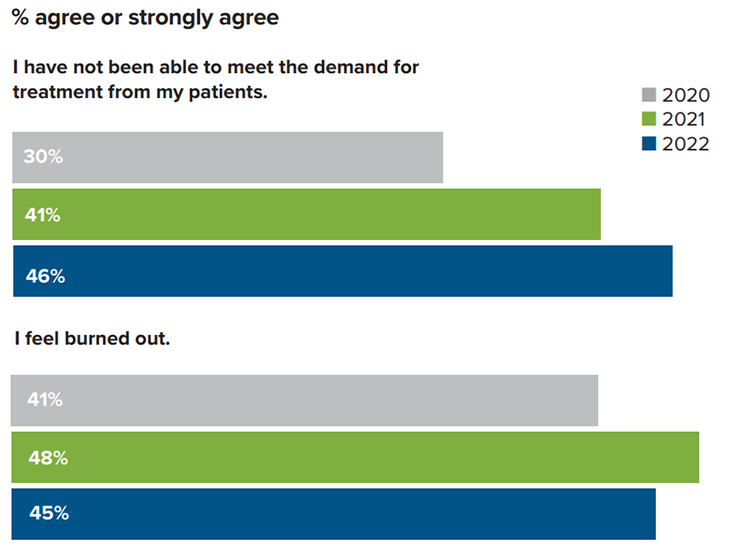
Burnout was discussed throughout my graduate education and during my early years as a therapist in my supervision. Often, the conversation focused on making sure I was engaging in self-care and allowing time for rest. Some of these things are easier said than done in certain professions where expectations can be high.
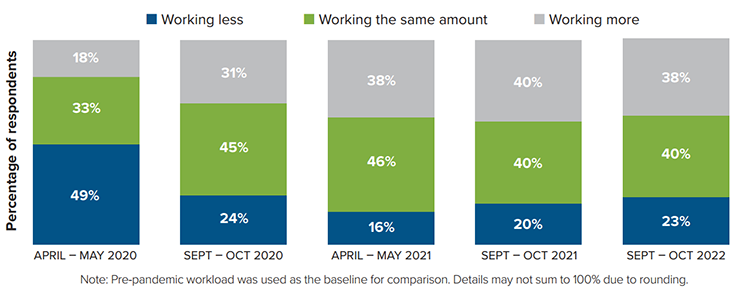
Burnout became a major topic of discussion among helping professions when COVID-19 was at its peak. We saw increased workload expectations across multiple disciplines, alongside major stress due to life changes such as masking, working from home, isolation, and the threat of severe illness.
How has the COVID-19 crisis impacted how much you work?
When did I notice I was burnt out?
Although I vividly remember crying in my car in the workplace parking lot, I have an even stronger memory of realizing I was burnt out and needed to make a change. This epiphany came on a Friday afternoon after seeing 32 clients during the week, many of whom I was providing intense trauma therapy. Driving home, I realized I hadn’t had any music playing in my car. Complete silence during my 20 minute drive home. My phone’s Bluetooth had disconnected from the car earlier that week because I had taken my husband’s vehicle and connected to his instead. It always had trouble reconnecting unless I did it manually.
That’s when it hit me: I hadn’t listened to any music all week. I began to take note of how I had been feeling. I was often asleep by 8:00 PM every night, and slept completely through the night. I’d be woken, exhausted, by my alarm at 7:00 AM only to hit snooze multiple times until I was forced out of bed at 8:15 AM to wash my face, brush my teeth, and put my hair up. I wasn’t putting on makeup or doing my hair. I searched for the most comfortable clothes to “get through the day” and got very upset if my comfy jeans or stretchy dress pants weren’t clean. I found myself avoiding conversations and connections, hoping to get home quickly to be able to relax. I didn’t want to do anything on weekends; I was exhausted and spent the time lying on the couch.
At that time, a position opened in a private practice. It took me only three hours to make the leap to submit my resume after over nine years in nonprofit agencies.
Can we prevent burnout?
I could sit here and tell you to take care of yourself, exercise consistently, eat healthy, talk with your own therapist, and maintain social interactions outside of work. These all sound like wonderful things to live a healthy, regulated life, and I do encourage them—especially for those in helping professions. However, I also think it’s poor taste to place the responsibility of preventing burnout solely on the individual working within an organization.
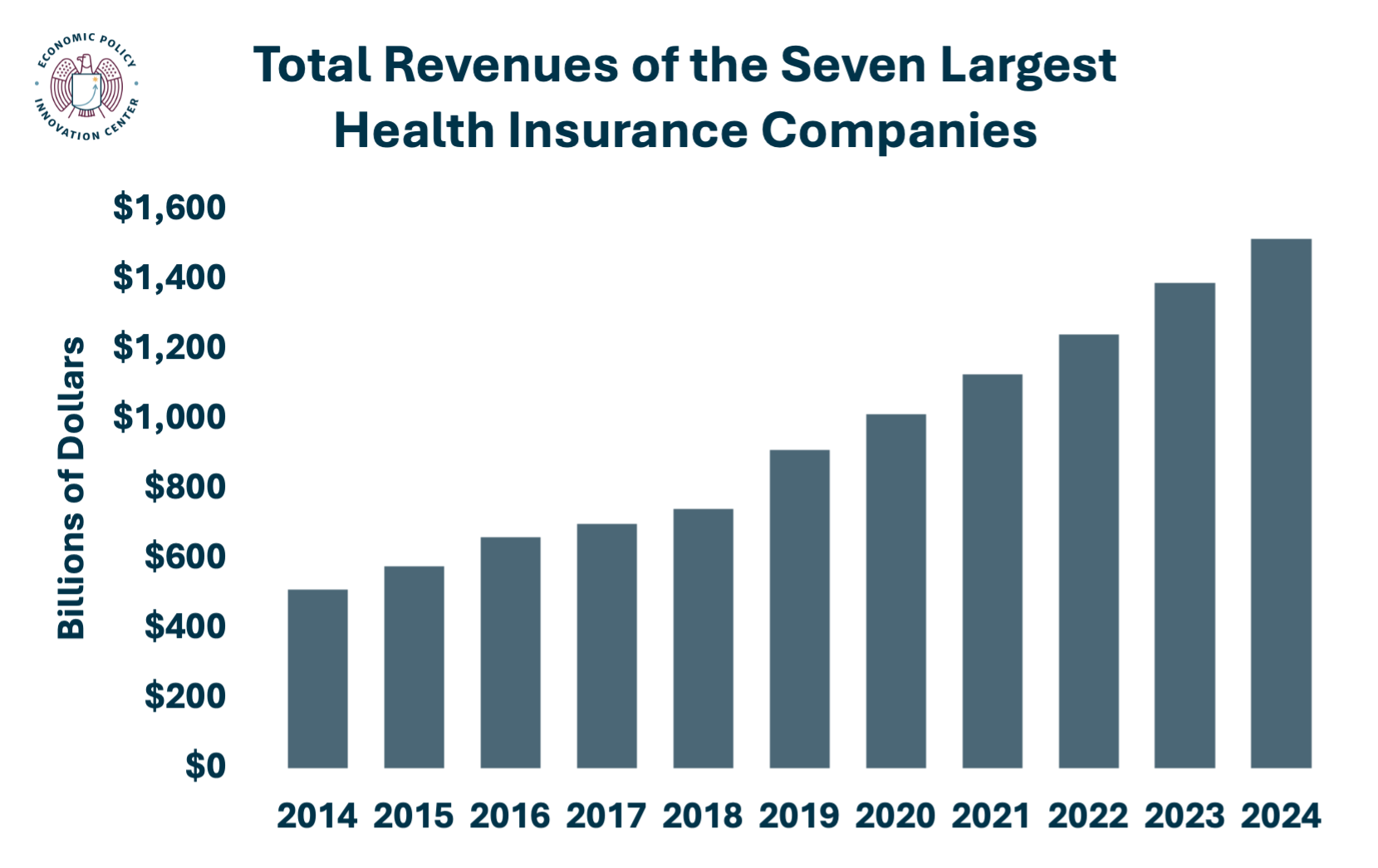
I believe a large part of the responsibility to preventing burnout, or even trying to address concerns of burnout, fall on the company, and also on insurance providers. Agencies and organizations often have high overhead, resulting in low pay for providers. These organizations provide essential care to their communities, which may mean providers having to see 30+ clients a day. These professionals are often salaried workers who will not make overtime but may be requested to provide their time on weekends for outreach services such as community engagement during a city festival or street fair. Along with agencies, insurance providers often reimburse therapy sessions at extremely low rates, resulting in providers needing to take on more clients to pay their own bills.
Many helping professionals have valid complaints while working in a community nonprofit agency or being credentialed with insurance companies that contribute to burnout and may push them out of the profession altogether.
Call to action
I have learned that experiencing burnout does not mean you are a bad helping professional. Burnout among helping professionals stems from both personal and systemic factors. While self-care is important, organizations must also ensure manageable workloads, fair pay, and supportive environments. When helping professionals are supported, they can provide better care to their clients and the communities they work in. Preventing burnout is a shared responsibility and is essential for sustaining the vital work they do.
Community Mental Health Agencies: It’s time to take responsibility for how nonprofit work contributes to employee burnout. Though I have never been in a high-level leadership role, I know I did not feel heard or taken seriously when expressing concerns about my burnout and wanting to leave. I did all of the things for self-care. I ate healthy meals and worked out. It got to the point where I asked to reduce my client load but received no response. The message I got was that my voice and concerns weren’t valid, which pushed me to seek opportunities outside nonprofit work despite my desire to stay.
Insurance Companies: I honestly don't even know what to ask of you at this point. Medical providers deserve to be paid at their identified rate for the services they provide. When total revenues reported in the financial filings of the seven largest health insurance companies—Centene, Cigna, CVS Health/Aetna, Elevance, Humana, Molina, and UnitedHealth Group—tripled in the last decade, revenue growing from $511 billion in 2014 to $1,517 billion in 2024, it seems as though you will never consider actually taking care of the people you provide insurance for or those who provide care to those people.
Professionals: Give yourself some credit. Many people avoid helping professions. It takes a special kind of person to do this work. But if you need a call to action, it’s this: take care of yourself. This could mean setting limits on how many clients you take or the type of work you continue to do. If it gets to the point where you can, consider finding a new job that better supports your wellbeing.
References:
Gadai Bulgac, & Gadai Bulgac. (2025, December). Health Insurance Revenues Tripled in a Decade - EPIC for America. EPIC for America. https://epicforamerica.org/the-economy/health-insurance-revenues-tripled-in-a-decade/
Govindu, M. (2023, April). Recognizing burnout and compassion fatigue among counselors. www.counseling.org. Retrieved May 28, 2025, from https://www.counseling.org/publications/counseling-today-magazine/article-archive/article/legacy/recognizing-burnout-and-compassion-fatigue-among-counselors
Kotera, Y., Maxwell-Jones, R., Edwards, A. M., & Knutton, N. (2021). Burnout in Professional Psychotherapists: Relationships with Self-Compassion, Work-Life Balance, and Telepressure. International journal of environmental research and public health, 18(10), 5308. https://doi.org/10.3390/ijerph18105308
Lin, L., Assefa, M., & Stamm, K. (2023, April 1). Practitioners are overworked and burned out, and they need our support. Monitor on psychology. https://www.apa.org/monitor/2023/04/psychologists-covid-burnout
SHRM. (2024, May 1). Here’s how bad burnout has become at work. SHRM. https://www.shrm.org/topics-tools/news/inclusion-diversity/burnout-shrm-research-2024